About This Project
The energy transition is already taking concrete shape at the local and regional level: buildings are being renovated, waste heat is being utilized, renewable energy is being generated and fed into the grid. Numerous pioneers, such as 100% renewable energy regions, solar cities, and master plan municipalities, demonstrate that municipalities play a key role and often pursue even more ambitious targets than those set at the national level. To achieve the national climate and energy targets, these successes must be extended to further regions. Accordingly, regions, cities, and municipalities are increasingly expected to develop local solutions.
Alongside the pioneers, there are therefore also many newcomers who find that implementing the energy transition locally is confronted with numerous barriers, such as limited human and financial resources, unclear responsibilities, acceptance issues, and conflicts of interest. In this context, local social, political, administrative, and economic framework conditions play a decisive role.
The E-SKA project addresses two central research questions:
- Under which conditions can barriers to the energy transition be overcome through cooperative strategies?
- How can successful cooperation strategies be transferred to other municipalities and energy transition projects?
E-SKA goes beyond the mere identification of solutions: its aim is to demonstrate concrete pathways for successfully transferring these strategies to other regions and municipalities. E-SKA is intended not only to introduce new actors to the cooperative energy transition, but also to provide existing initiatives with valuable impulses for further developing and scaling their collaborative efforts.
Project Areas
Identification of social dilemmas
The energy transition is happening locally – in cities, towns, and municipalities. But it is precisely there that typical obstacles repeatedly arise, slowing progress. Social scientists call them social dilemmas: situations in which individually rational behavior leads to collectively poor results, e.g. when everyone waits for someone else to take the first step.
Four such dilemmas particularly characterize the local energy transition:
Free-rider problem: Municipalities hesitate to invest in renewable energies because they hope that neighboring cities will take the lead – with the result that no one makes any progress
User-investor dilemma: Those who invest don’t benefit – and those who benefit don’t pay. A classic example: A municipal utility expands the grid for solar power generation without directly benefiting from it itself.
Siting dilemma: Individual subgroups bear the burdens of a project – noise, landscape changes – while the benefits accrue to the entire community. This is the dilemma most frequently discussed in research.
Assurance game: Large-scale projects like district heating networks or biomass plants require the simultaneous commitment of multiple stakeholders – if one party hesitates, the entire project risks failure
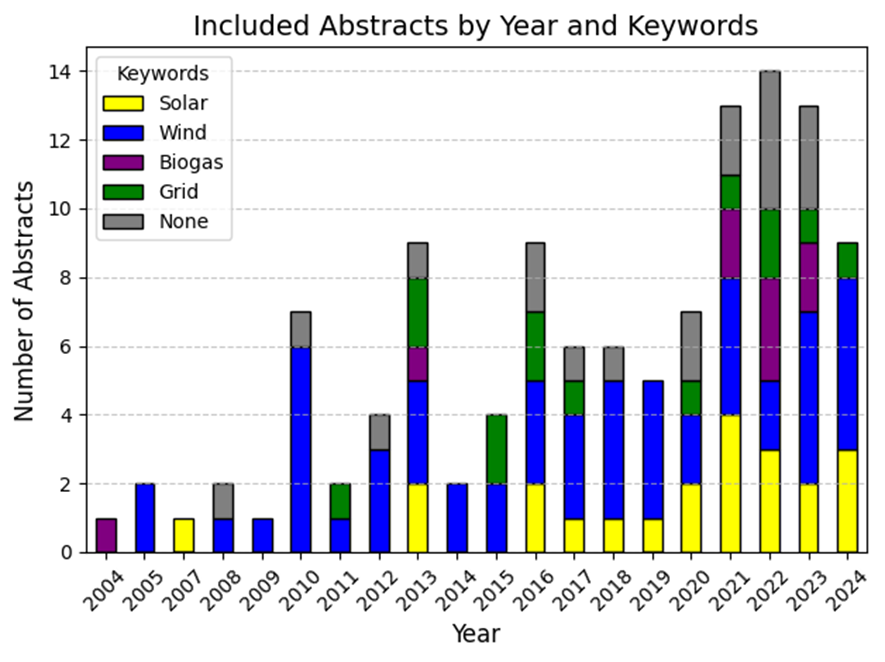
To systematically understand these dilemmas, the E-SKA team conducted an AI-powered literature review of 901 scientific articles. Key finding: Site conflicts dominate research, while heat and user-investor dilemmas, despite their practical relevance, have received little attention in this context.
Based on these findings, the project team jointly developed an analytical framework. This framework defines the dilemmas and types of cooperation that are central to E-SKA and identifies the indicators by which successful energy transition collaborations can be recognized.
More information can be found in the project area PIONEER DATABASE and here BLOG POST Energy Transition Collaborations.
This step is complete. The key results are summarized in two blog posts and are available for download below.
Link(s)
Policy Analysis
Municipalities, public utilities, and cooperatives want to advance the energy transition. But whether collaborations succeed depends on more than just good intentions. The political framework plays a crucial role: it can mitigate social dilemmas or, in the worst-case scenario, even exacerbate them. Financial incentives, for example, can alleviate the user-investor dilemma. Transparent participation processes can prevent location conflicts and clear responsibilities can prevent everyone from waiting for someone else to act and no one taking action.
E-SKA therefore analyzes how the political framework in Germany promotes or hinders energy transition collaborations – and what specific scope for action local actors have.
What the analysis shows for Germany:
On the one hand, EU directives on energy communities, the Heat Planning Act, energy-sharing regulations, as well as funding programs and intermediary structures such as state energy agencies create important foundations for collaborations. On the other hand, federal fragmentation, contradictory signals from policymakers, high bureaucratic burdens, and a massive staff shortage in local government are slowing progress. Small municipalities and energy cooperatives are particularly disadvantaged structurally.
Funding programs such as the Masterplan Municipalities initiative of the National Climate Initiative have demonstrably spurred cooperation. Intermediary structures—such as state energy agencies, the Schleswig-Holstein Heat Competence Center, or the Baden-Württemberg Energy Dialogue Forum—reduce information asymmetries and foster trust between stakeholders.
At the same time, significant structural hurdles exist:
Lack of integration between top-down and bottom-up approaches: In Germany’s multi-level system, two contradictory understandings of the energy transition clash: as a public service on the one hand, and as a market process on the other. This creates friction and often leaves municipalities caught in the middle.
Financial and personnel constraints hit small municipalities particularly hard and make it difficult to initiate and sustain cooperation.
Regulatory hurdles: The energy-sharing regulation (§42c EnWG) is criticized as a „minimalist“ approach that does not ensure economic viability and does not compensate for the bureaucratic burden.
Political volatility, for example due to the GEG debate but also in the promotion and regulation of renewable (and fossil) energies, creates planning uncertainty and slows down long-term cooperation projects.
The results of this analysis form a central basis for all further E-SKA work steps and project areas.
Pioneer Database
Which energy transition collaborations are successful in Germany and why? To answer this question, a systematic overview is needed of who is cooperating with whom, in what form, for what purpose and with what success.
E-SKA is creating a pioneering database for this purpose. It is a directory of documented (successful) energy transition collaborations in Germany. The database draws on research databases, reports from related projects, funding program data, and targeted interviews with practical partners and their networks.
To this end, we first identified the various forms of collaborative arrangements that exist in Germany and which of these can be classified as „energy transition collaborations.“ The range of collaborations included is broad. It extends from registered energy cooperatives and municipal associations to joint public utilities and informal networks without a formal legal structure. Municipalities and districts, public utilities, companies, citizens, and civil society initiatives can all be involved. Also in terms of content, the collaborations cover a wide spectrum. Form wind and solar power over district heating networks, grid infrastructure, and more.
The database records which actors, technologies, and institutions are involved, what social dilemmas they face, and what criteria define their success. Failures are also deliberately included because even failed collaborations provide valuable insights into what doesn’t work.
The Pioneer Database is not a one-off result, but a dynamic tool. It is continuously updated throughout the project and forms the basis for the in-depth case studies, archetype analysis, and matching approach in subsequent project phases.
Comparative Case Studies
Data and overviews are a first step. But to truly understand why some energy transition collaborations succeed while others fail to even emerge, a closer look is needed.
This is precisely what the comparative case studies of E-SKA provide. We focus particularly on collaborations that have not yet been extensively researched. These include inter-municipal energy cooperatives, participatory working groups for local energy planning, and the scaling of citizen-owned heating cooperatives.
From the pioneer database, we selected and examined in-depth energy transition collaborations and municipalities. These studies allow us to gain a better understanding of how local context, dilemmas, and cooperative solutions are interconnected.
For each case, relevant documents are analyzed. These include among others political strategies, founding statements, press releases and newspaper articles. Additionally, we conduct semi-structured interviews with key stakeholders. The central question is always which forms of collaboration have helped to overcome (or avoid) social dilemmas, and how this related to the specific local context. Furthermore, we are examining the models‘ potential for horizontal scaling.
The findings from the case studies not only serve to test the hypotheses developed in the project, but also sharpen our understanding of the underlying mechanisms. They are directly incorporated into the subsequent archetype analysis
Archetypes
Collaboration for the energy transition doesn’t emerge in a vacuum. Whether municipalities collaborate successfully depends heavily on their local context. This includes structural factors such as budgetary constraints, ownership structures of energy infrastructure, and population density, as well as social factors like trust, capacities, and historically developed constellations of stakeholders. The E-SKA project systematically visualizes these contexts.
To this end, the consortium is building a comprehensive database for all municipalities in Germany. This database incorporates a wide range of sources: data from the Thünen Land Atlas, information on the ownership structures of municipal utilities, municipal surveys, master data on energy facilities, and income and education data from the federal and state governments. This database forms the methodological backbone of the project. It informs the case selection, feeds into the scaling analysis, and provides reliable data for multipliers and workshops. It will also be made publicly accessible towards the end of the project.
Based on this database, municipalities are classified according to recurring context types – so-called archetypes. Instead of examining each municipality individually, the archetype approach explores the different types of municipalities and their structural connections. Using principal component analysis and clustering, we identify groups with similar factor constellations.
We then examine whether and how these types are systematically related to the presence of social dilemmas and the success of collaborations.
Research questions include among others: In which contexts do energy transition collaborations regularly fail due to coordination problems? Where are free-rider problems or conflicts of interest successfully overcome?
Types that do not provide sufficient information are discarded. The result is a manageable number of robust archetypes. The project anticipates between four and fifteen. All German municipalities can be assigned to these archetypes. Their characteristics and distribution across Germany are described descriptively.
The outcome is a structured picture of the diverse starting conditions for energy transition collaborations in Germany and a tool that allows for targeted conclusions for municipalities, policymakers, and practitioners.
Matching
Guiding Question: Which municipalities can learn from each other and how can successful collaborations be practically scaled up?
Based on the patterns identified in the archetype analysis, municipalities of the same archetype are strategically matched. The basic idea is that municipalities that share structurally similar starting conditions, for example, regarding size, economic structure, political environment, and the social dilemmas they face, have a good foundation for learning from each other and transferring successful approaches. This so-called horizontal scaling is the focus of the scaling analysis.
For each identified archetype, we select paradigmatic pairs of municipalities and examine how well the transfer of cooperative approaches between them can succeed. Actor constellations known from the in-depth case studies are incorporated, as is the municipal database. The result is a well-founded catalog of matching criteria and concrete examples, validated through document analysis and scientific expert assessments..
To test the practical applicability of the matching approach, we conduct so-called „simulation labs.“ In this format, representatives from the municipal administration and (ideally) other local stakeholders, such as businesses, civil society organizations, associations, and clubs, come together. The goal is to use the participants‘ (local) expertise to simulate, in a practical way, the extent to which selected archetypes and matching recommendations could be applied to the specific local context, and where the approach reaches its limits.
We plan: to test different archetypes. The results of the events will be documented and incorporated into the further development of the archetype database and other project products.
Implementation Guide
Research findings only have an impact when they are put into practice. The final project area of E-SKA bridges precisely this gap between scientific knowledge and concrete action on the ground.
At its core is a practice-oriented toolkit for local stakeholders. These include municipal utilities, energy cooperatives, and sustainability managers in municipalities and companies.
The toolkit contains step-by-step instructions that familiarize local stakeholders with the identified archetypes and demonstrate how cooperative action strategies can be adapted to their own context. It supports both the establishment of new energy transition collaborations and helps existing collaborations to better understand and proactively address social dilemmas, for example, by strategically expanding the circle of stakeholders. The toolkit is supplemented by a benefit assessment that allows municipalities and local stakeholders to evaluate the concrete added value that a collaboration would bring to them, as well as by recommendations for using the databases and archetype catalog developed within the project
To ensure the guidelines are not only read but also used, application workshops are being held throughout the project. These are integrated into existing ASEW event formats and disseminated via other networks such as the VKU, the leading municipal associations, and the working group on municipal climate protection. Feedback from the workshops is iteratively incorporated into the further development of the toolkit.
Project Details & Funding Body
