E-SKA Forschungsteam auf dem NIÖ Network Meeting – Kooperation als Schlüssel zur Energiewende
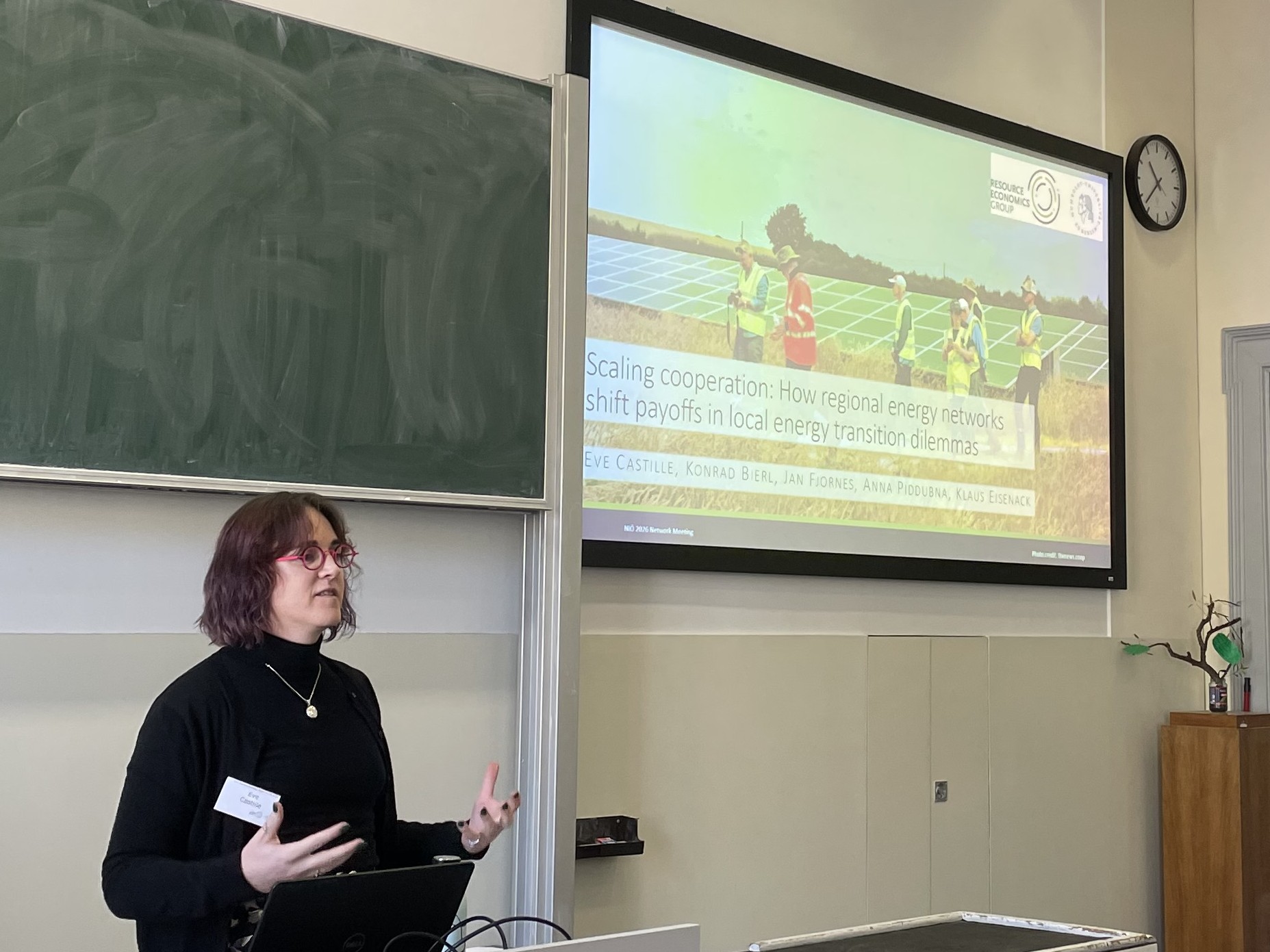
Am 17. Und 18. März waren haben wir am jährlichen NIÖ Network Meetings teilgenommen. Das Forschungsnetzwerk besteht seit über 20 Jahren rund um die Neue Institutionenökonomik (NIÖ) und das Konzept der „Institutions of Sustainability“. Die diesjährige Überschrift lautete: „Commons for the (Not) Gentle World: Institutions, Cooperation and the Shifting Political Landscape“.
Unser Beitrag: Skalierung von Kooperation in der Energiewende
Das Projekt E-SKA war mit einer Forschungspräsentation vertreten. Unter dem Titel „Scaling cooperation: How regional energy networks shift payoffs in local energy transition dilemmas“ stellte Dr. Eve Castille aktuelle Ergebnisse aus dem Projekt vor.
Im Mittelpunkt stand die Frage: Unter welchen Bedingungen lassen sich soziale Dilemmata bei der Ansiedlung erneuerbarer Energien durch kooperative Strategien überwinden?
Städte sind zwar Hauptverbraucher von Energie, verfügen aber oft nicht über ausreichend Fläche für erneuerbare Energieanlagen. Ländliche Räume rücken damit zunehmend in den Fokus – stehen jedoch vor komplexen Verteilungskonflikten zwischen Kosten und Nutzen. Die vorgestellte Forschungsarbeit orientiert sich am Institutional Analysis and Development Framework (Ostrom 2010) und modelliert dieses Spannungsfeld als zweistufiges spieltheoretisches Modell: Auf der ersten Stufe entscheiden benachbarte Kommunen, ob sie Erneuerbare-Energien-Anlagen auf ihrem Gemeindegebiet akzeptieren oder auf die andere Kommune verweisen. Auf der zweiten Stufe treten sie in Interaktion mit lokalen Betroffenen, die das Projekt unterstützen oder bekämpfen können.
Zur empirischen Validierung wurden Daten aus allen deutschen Gemeinden mit installierten Kapazitätsdaten von 1990 bis 2024 genutzt – ergänzt durch Informationen zu Bürgerbegehren als Indikator für lokalen Widerstand.
Illustrative Fallstudien – die Neue Energien West eG und die KERL eG in der Oberpfalz – zeigen, wie regionale Kooperationsstrukturen die Anreize verschieben können. Starke Institutionalisierung und kongruente Regeln (im Sinne des IAD-Frameworks) können die regionale Wertschöpfung erhöhen, politische Kosten für Kommunen senken und die Akzeptanz in der Bevölkerung stärken.
Im Anschluss an die Präsentation wurde eine Diskussion mit dem Fachpublikum gestartet – ein wertvoller Austausch im Schnittfeld von institutioneller Analyse, gemeinsamer Forschung und Energiewendepolitik.
Unsere wichtigsten Erkenntnisse
Diese Untersuchung und die Gespräche mit Fachleuten haben folgende Ideen bestätigt:
- Eine gerechte Ausweitung der Energiewende bedeutet, dass wir verstehen müssen, wie die Kosten für die Bewohner ländlicher Gemeinden abgefedert werden können.
- Hohe Kosten für die betroffene Bevölkerung führen nicht immer zu Widerstand. Es gibt auch Kosten für den Kampf, und wir untersuchen Möglichkeiten, diese zu beobachten, beispielsweise anhand des sozialen Zusammenhalts und von Bürgerpetitionen. Vielleicht handelt es sich hierbei nicht um Kosten für den Kampf, sondern vielmehr um ein Maß an sozialem Zusammenhalt oder eine Tradition der Basisorganisation.